Lalita Sahasranamam: Accessing the Malayalam PDF
Finding a reliable Malayalam PDF of the Lalita Sahasranamam requires careful navigation of online resources, considering potential issues with authenticity and compatibility.
What is the Lalita Sahasranamam?
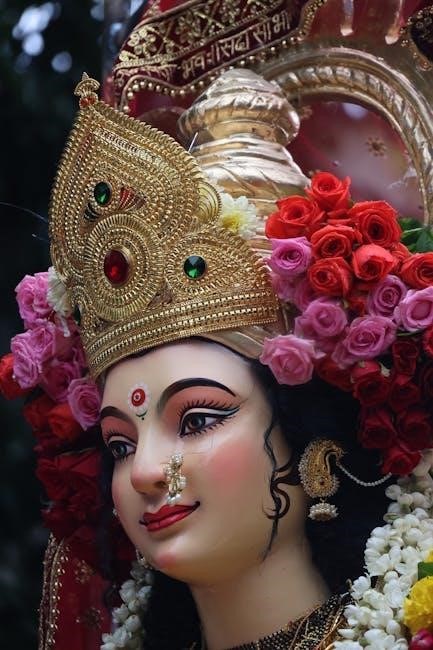
The Lalita Sahasranamam is a revered Hindu text, a hymn containing the thousand names of the Goddess Lalita, a form of Devi, representing the Divine Mother. It’s a core text within Shakta traditions, deeply venerated for its spiritual power and intricate descriptions of the Goddess’s attributes.
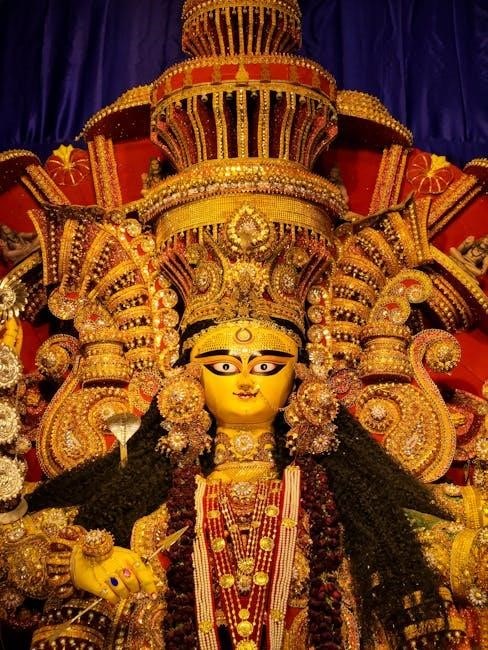
Each name (nama) isn’t merely a label, but a key unlocking a specific aspect of the Divine Feminine, encompassing her power, beauty, and compassion. Recitation, often accompanied by puja (worship), is believed to bestow blessings, remove obstacles, and lead to spiritual liberation. The text is traditionally chanted in Sanskrit, but translations and transliterations exist in numerous languages, including Malayalam, making it accessible to a wider audience seeking connection with the Goddess.
Why a Malayalam PDF?
For Malayalam speakers, a PDF version of the Lalita Sahasranamam offers unparalleled convenience and accessibility. It allows for direct engagement with the text in their native language, fostering a deeper understanding of the Goddess’s names and their meanings without relying on translation.
A Malayalam PDF facilitates accurate pronunciation during chanting, crucial for the efficacy of the practice according to traditional beliefs. It also supports personal study and contemplation, enabling devotees to delve into the nuances of each name. Furthermore, a digital format allows for easy portability, enabling practice during travel or outside of a traditional temple setting, making spiritual connection readily available.
Finding Reliable Malayalam PDF Sources
Locating trustworthy Malayalam PDFs involves exploring online repositories, dedicated spiritual websites, and relevant social media groups for authentic texts.
Online Religious Text Repositories
Several digital libraries and online repositories specialize in preserving and distributing religious texts, potentially hosting the Lalita Sahasranamam in Malayalam; These platforms often aim for accuracy and completeness, making them a good starting point for your search. However, verifying the source’s reputation is crucial. Look for repositories affiliated with established religious organizations or academic institutions.
Consider exploring digital archives maintained by temples or spiritual centers known for their devotion to Lalita Devi. These may offer scanned copies or digitally typeset versions of the Sahasranamam. Always check user reviews or comments, if available, to gauge the quality and reliability of the PDF before downloading. Be mindful of potential copyright restrictions and ensure the distribution aligns with ethical guidelines.
Dedicated Spiritual Websites
Numerous websites are specifically dedicated to Hindu spirituality and Goddess worship, frequently offering resources like the Lalita Sahasranamam. These sites often provide not only the PDF text but also accompanying explanations, audio recitations, and scholarly articles. When using these resources, prioritize websites created by respected spiritual teachers or organizations with a proven track record of authenticity.
Look for sites that clearly state the source of their Malayalam translation and transliteration. A reputable website will typically acknowledge the translator and any editorial oversight. Be cautious of sites with excessive advertising or unclear contact information. Cross-reference the PDF with other known versions to ensure accuracy and completeness, paying attention to the Sanskrit verses and their Malayalam interpretations.
Social Media Groups & Forums
Facebook groups and online forums dedicated to Hindu dharma and specifically Lalita Devi often serve as hubs for sharing religious texts, including the Malayalam PDF of the Sahasranamam. While these platforms can be valuable, exercise significant caution regarding the source and authenticity of shared files. User-generated content isn’t always vetted for accuracy.
Always verify any PDF downloaded from these sources against established, reputable versions. Ask the person who shared the file about its origin and any known corrections. Engage with the community to inquire about the PDF’s reliability and if others have successfully used it for practice. Remember that relying solely on social media for sacred texts carries inherent risks regarding accuracy and completeness.
Verifying PDF Authenticity & Completeness
Confirming the Malayalam PDF’s accuracy involves checking Sanskrit transliteration, Malayalam translation, and ensuring all 1000 names are present without omissions or errors.
Checking for Correct Sanskrit Transliteration
Accurate Sanskrit transliteration is foundational to the Lalita Sahasranamam’s efficacy. A reliable Malayalam PDF should meticulously represent the original Sanskrit sounds using the Malayalam script. Examine key names and verses, comparing them against established Sanskrit texts and transliteration schemes. Look for consistency in vowel markings, consonant representations, and the use of appropriate diacritics.
Inconsistencies, such as incorrect matras (vowel sounds) or substitutions of similar-looking consonants, can alter the mantra’s potency. Cross-reference with multiple sources, including online Sanskrit dictionaries and transliteration guides, to verify the accuracy of each syllable. Pay close attention to the anusvara and visarga symbols, as their correct placement is crucial for proper pronunciation and meaning. A flawed transliteration undermines the entire practice.
Ensuring Accurate Malayalam Translation
The Malayalam translation within the PDF must faithfully convey the nuanced meanings of each Sanskrit name and verse. Literal translations can sometimes miss the deeper spiritual implications, so look for a translation that balances accuracy with insightful interpretation. Check for consistency in terminology; the same Sanskrit name should always be rendered with the same Malayalam equivalent throughout the text.
Compare the Malayalam translation with known commentaries and explanations of the Lalita Sahasranamam, if available. A good translation will reflect the tantric context and the inherent energy (Shakti) associated with each name. Be wary of overly simplistic or paraphrased translations that may dilute the original power. A precise and thoughtful Malayalam rendering is vital for a meaningful devotional experience.
Confirming the Inclusion of All 1000 Names
A complete Lalita Sahasranamam PDF must contain all 1000 names, meticulously listed in the traditional order. Verify this by cross-referencing the PDF’s content with a known, authoritative list of the names – either in Sanskrit transliteration or a trusted English translation. Incomplete PDFs are unfortunately common, often omitting names due to scanning errors or deliberate alterations.
Carefully scroll through the document, or utilize the PDF’s search function to locate specific names from different sections. Pay attention to pagination; a missing page could indicate a significant omission. Ensure that the numbering sequence is continuous and unbroken. A truly complete PDF will offer the full spiritual benefit of reciting all 1000 divine names.
Understanding the Structure of the Lalita Sahasranamam
The Sahasranamam is organized into sections representing the five Shaktis, with names grouped thematically, enhancing understanding and facilitating focused worship.
The Five Shaktis and Their Representation
The Lalita Sahasranamam beautifully embodies the five primary Shaktis – Para, Pashyanti, Madhyama, Vak, and Vaikhari – representing different levels of consciousness and divine energy. Para Shakti is the transcendent, unmanifest source, while Pashyanti is the intuitive, visionary power. Madhyama Shakti represents the mental plane, where thoughts take form.
Vak Shakti is expressed through speech and sound, and Vaikhari is the physical manifestation of energy. Each section of the Sahasranamam subtly reflects these Shaktis, with names resonating with specific qualities. Understanding this framework deepens the devotee’s connection to the divine feminine and allows for a more nuanced appreciation of each name’s significance within the larger cosmic order. The Malayalam PDF, when studied with this context, unlocks a richer spiritual experience.
The Organization of the Names (Sections)
The Lalita Sahasranamam’s 1000 names aren’t randomly listed; they’re meticulously organized into sections, each focusing on a specific aspect of the Divine Mother. These sections typically begin with names relating to her physical form, progressing to descriptions of her attributes, powers, and ultimately, her transcendental nature.
A common structure divides the names into five main chapters, each further subdivided. A well-formatted Malayalam PDF will clearly delineate these sections, aiding in focused contemplation. Recognizing this organization allows devotees to systematically explore the multifaceted glory of Lalita Devi. The PDF’s structure should mirror this traditional arrangement, facilitating a deeper understanding and effective recitation of the sacred names.

Importance of the Nyasa Technique
Nyasa, a crucial ritualistic practice accompanying Lalita Sahasranamam recitation, involves mentally associating each name with specific parts of the body. This technique isn’t merely symbolic; it’s believed to energize those body parts and awaken the latent divine energy within. A comprehensive Malayalam PDF might briefly explain Nyasa, though detailed instructions are usually learned from a Guru.
When using a PDF, understanding where in the text Nyasa points correspond is vital. Some PDFs may even include subtle markings. Correctly performing Nyasa amplifies the benefits of the Sahasranamam, transforming it from a recitation into a powerful spiritual practice. It’s a key element for devotees seeking profound transformation through this sacred text.

Using the Malayalam PDF Effectively
Maximize your experience by adjusting font sizes, utilizing the search function for specific names, and considering print quality for ritualistic puja purposes.
Font and Display Settings for Readability
Ensuring comfortable reading of the Lalita Sahasranamam Malayalam PDF necessitates careful attention to display settings. Many PDF viewers allow customization of fonts; selecting a clear, Unicode-compliant Malayalam font is crucial for accurate character rendering. Experiment with different font sizes to find one that minimizes eye strain during prolonged recitation or study.
Adjusting the screen brightness and contrast can also significantly improve readability, particularly in varying lighting conditions. Consider enabling the ‘reflow text’ option within your PDF viewer, if available, to automatically adjust the text layout to fit the screen width. This feature can be especially helpful on smaller devices. Zooming functionality provides another layer of control, allowing you to magnify specific sections for detailed examination of the Sanskrit transliteration or Malayalam translation. Prioritize a visually clear presentation to enhance your engagement with the sacred text.
Utilizing Search Functionality within the PDF
The search function within your Malayalam Lalita Sahasranamam PDF is an invaluable tool for focused study and recitation. You can quickly locate specific names (namas) by entering them in Sanskrit transliteration or their Malayalam translation. This is particularly useful when seeking the meaning or context of a particular name.
Furthermore, the search feature allows you to find references to specific deities or concepts associated with Lalita Devi. Experiment with keywords related to the five Shaktis or the different sections of the Sahasranamam. Remember to check search settings for case sensitivity and whole word matching for more precise results. Efficiently navigating the 1000 names becomes significantly easier with a thorough understanding of the PDF’s search capabilities, enhancing your spiritual practice.
Printing Considerations for Puja Use
When printing a Malayalam Lalita Sahasranamam PDF for puja (worship), prioritize legibility and clarity. Select a font size that is comfortable for reading during recitation, and ensure the Malayalam script renders correctly on paper. Consider printing on a durable, slightly thicker paper stock to withstand repeated handling.
Double-sided printing can conserve paper, but verify that the text doesn’t bleed through. Before a full print, always perform a test print to check formatting and font rendering. Binding the printed sheets neatly is recommended for ease of use during rituals. Ensure the printed copy accurately reflects the PDF’s content, avoiding any omissions or errors that could affect the sanctity of the puja.

Additional Resources for Learning
Explore Malayalam commentaries, audio recitations, and online courses to deepen your understanding of the Lalita Sahasranamam and its profound spiritual significance.
Malayalam Commentary and Explanations
Delving into Malayalam commentaries provides invaluable insights into the Lalita Sahasranamam’s intricate meanings and philosophical underpinnings. These resources, often authored by experienced scholars and practitioners, unpack the symbolism embedded within each of the 1000 names. Look for commentaries that not only translate the Sanskrit but also contextualize the names within the broader Tantric tradition.
Authentic Malayalam explanations illuminate the specific deities, energies, and cosmic principles associated with each name, enhancing comprehension and facilitating a deeper connection with the divine feminine. Several respected spiritual organizations and individual teachers offer these commentaries in book form or through online platforms. Prioritize sources that demonstrate a strong grounding in both Sanskrit and Malayalam linguistic traditions, ensuring accuracy and clarity.
Consider seeking out commentaries that also address the practical application of the Lalita Sahasranamam in daily life and spiritual practice, offering guidance on mantra recitation, puja rituals, and meditation techniques.
Audio Recitations in Malayalam
Complementing the Malayalam PDF with audio recitations significantly enhances the learning and devotional experience of the Lalita Sahasranamam. Hearing the correct pronunciation of each name is crucial for accurate mantra practice and unlocking its vibrational power. Numerous recordings are available online, featuring both traditional and contemporary reciters.
Seek out recitations by respected spiritual figures or those affiliated with established temples and lineages. Pay attention to the clarity of the audio and the reciter’s adherence to traditional pronunciation guidelines. Different styles of recitation exist, ranging from slow and deliberate to faster and more melodic; choose one that resonates with your personal preference.
Utilizing audio alongside the PDF allows for simultaneous reading and listening, reinforcing memorization and deepening understanding. These recitations can be incorporated into daily sadhana, creating a powerful and transformative spiritual practice.
Online Courses and Workshops
For a more structured and in-depth understanding of the Lalita Sahasranamam, consider enrolling in online courses or workshops specifically designed for Malayalam-speaking devotees. These programs often provide detailed explanations of each name, its etymological roots, and its significance within the broader Tantric framework.
Look for courses taught by experienced teachers with a strong background in Sanskrit, Tantra, and Malayalam. Reputable platforms and spiritual organizations frequently offer such programs, often including live sessions, Q&A opportunities, and downloadable resources to supplement the Malayalam PDF.
These courses can clarify complex concepts, address individual questions, and guide you through the proper techniques for reciting and internalizing the Lalita Sahasranamam, fostering a deeper connection with the Divine Mother.

Potential Issues with Online PDFs
Downloading PDFs online carries risks: copyright violations, incompatible formats, rendering errors, and potential exposure to viruses or malware are all concerns.
Copyright and Distribution Concerns
The Lalita Sahasranamam, while ancient, may have specific translations and transliterations subject to copyright. Distributing unauthorized copies of a Malayalam PDF, even for devotional purposes, could infringe upon these rights. Many online sources lack clear copyright information, making it difficult to ascertain legal usage.
Consider that scholarly translations or those with unique commentaries are more likely to be protected. Simply reciting the names isn’t copyrightable, but a specific Malayalam rendering is. Always seek PDFs from reputable sources that acknowledge copyright or offer the text under a permissive license. Supporting publishers who legally produce these texts ensures continued availability and accurate scholarship. Be mindful of sharing links to potentially infringing materials.
PDF Compatibility and Rendering Errors
Downloading a Malayalam PDF of the Lalita Sahasranamam can sometimes lead to compatibility issues. Different PDF readers (Adobe, Foxit, etc.) may render the complex Malayalam script inconsistently, resulting in garbled text or missing characters. This is particularly common with older PDFs or those created with non-standard fonts.
Ensure your PDF reader is up-to-date and supports Unicode encoding, crucial for displaying Malayalam correctly. If errors persist, try a different reader or convert the PDF to another format (like a Word document) – though this may alter formatting. Font embedding within the PDF is vital; if fonts aren’t embedded, substitution can occur, causing display problems. Testing on multiple devices is recommended.
Virus and Malware Risks
Downloading PDFs, especially from unfamiliar sources, carries inherent security risks. PDFs containing malicious code can infect your device with viruses or malware. This is a significant concern when seeking a Malayalam Lalita Sahasranamam PDF from less reputable websites or file-sharing platforms. Always exercise extreme caution before downloading and opening any PDF file.
Employ a robust antivirus program and ensure it’s actively scanning downloads. Avoid clicking on suspicious links within the PDF itself. Consider using a dedicated PDF viewer with built-in security features. Regularly scan your system for malware. Prioritize downloading from trusted religious text repositories or established spiritual websites to minimize exposure to potential threats. A compromised PDF can lead to data theft or system damage.